
PerfectWave/Shutterstock
We may receive a commission on purchases made from links.
One thing we've learned over the years is that certain things get harder as we get older. Driving is one of those things. That doesn't automatically mean that you have to turn in that license, however. There are a ton of modifications (mods) you can do to make your automobile drivable for you. In other words, if you've been thinking about pimping your ride for that senior life, you've got options.
Comfort isn't just a luxury as we age; it becomes a necessity the more our bones and joints begin to hurt. Extra cushiony seats and lumbar support can help with that. Getting in and out of a car is extra challenging once we've reached our golden years, but there are products that can help with this situation, too, including support bars and swivel seats. Even being confined to a wheelchair or scooter doesn't have to keep us out of the driver's seat, thanks to hoists and lifts.
Our eyes begin to fail us at a certain point, but there are mods that cut down on night-time glare and assist with seeing at night. Larger mirrors and panoramic camera angles mean we don't have to crane our necks to see our surroundings, which is especially helpful since blind spots keep getting bigger, according to the IIHS. There are also products that can put secondary controls within our reach.
Mods for a comfier ride
Jenson/Shutterstock
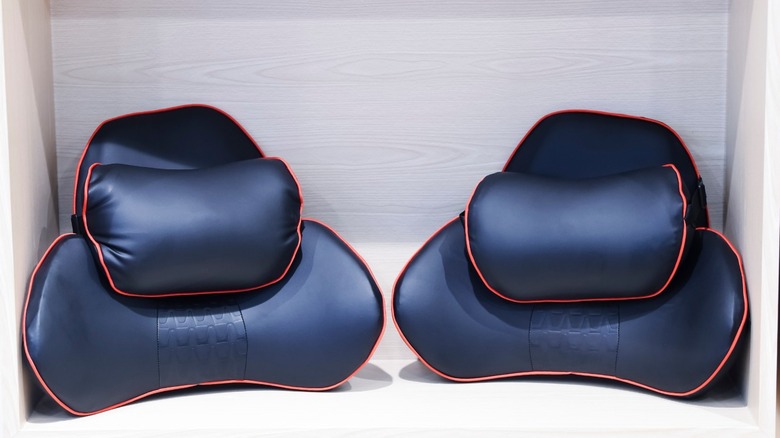
It seems that once you reach a certain age, you start spending most of your day looking for a comfortable place to sit. At least that's been our experience. Your mileage may vary. So, it comes as no surprise to us that the most common aftermarket mod seniors do to adapt their cars is to make their seat more comfy. According to the AAA, 44.8% of aftermarket adaptations by older drivers included a seat cushion. Other mods listed included upper body support and modified armrests. These mods, especially thicker seat cushions, can serve a purpose beyond making the ride more comfortable. Sure, an older person's back, neck, and joints typically benefit from these adaptations, but properly adjusted seats can also improve posture and visibility. However, publications like Consumer Reports have highlighted potential hazards of using aftermarket seat cushions, noting how they can compromise crash safety.
AAA expands on these safety risks, "Never purchase or install these features [ex: aftermarket seat cushions] without first consulting an occupational therapy-driver rehabilitation specialist (OT-DRS). Some aftermarket products can alter the effectiveness of seat belts, airbags or other safety features. Along with properly installing new features in your vehicle, an OT-DRS can recommend vehicle modifications to adapt your vehicle to individual needs."
In addition to following AAA's advice, lots of new cars come with OEM [original equipment manufacturer] features that help older drivers without the need for aftermarket mods. These features include heated seats with lumbar control and power-adjustable seats that raise and lower, as well as slide and tilt forward and backward in a ton of different positions. Leather also makes it easier to shift around in the seat.
Mods for seamlessly getting in and out of vehicles
If there's one bad thing about finding a comfortable place to sit, it's having to stand up again. We used to think our parents were exaggerating when they would grunt and moan as they brought themselves to a standing position, using the same noises they used when bending to sit down in the first place. But no, they were probably holding back, if anything. That's why there are available modifications like a flat swivel cushion, which makes it possible to get in and out of a seat without having to twist your body. Drivers just need to remove the cushion before setting off in motion to minimize risks during accidents, like sliding off the seat.
Another mod with solid online reviews is a transfer-assist grab bar. It doesn't require any sort of installation. Just hook it onto that U-shaped striker on your door jamb, stand up, put the grab bar in your purse or pocket, and you're good to go. A similar item is an assist strap, or "car caddy", that straps around the frame of a door window, allowing the driver to pull themselves up with more stability. There are also leg-lift straps, which help lift one's legs in and out of seats. If you own a truck, you might want to weigh the pros and cons of power running boards for easier entries and exits. All of these modifications could extend a senior's independence for years.
Mods for improving environmental awareness
RoClickMag/Shutterstock
There comes a point in aging when you'll have to consider getting bifocals, and, unfortunately, it's all downhill from there when it comes to your vision. Soon, you're wondering out loud why the people who make labels have to "make the print so small." Car makers are guilty of this, making the wording on controls hard to see. That's why the NHTSA recommends that seniors look for cars that can be fitted with "oversized knobs with clearly visible labels" and "large or adjustable-size print for dashboard gauges."
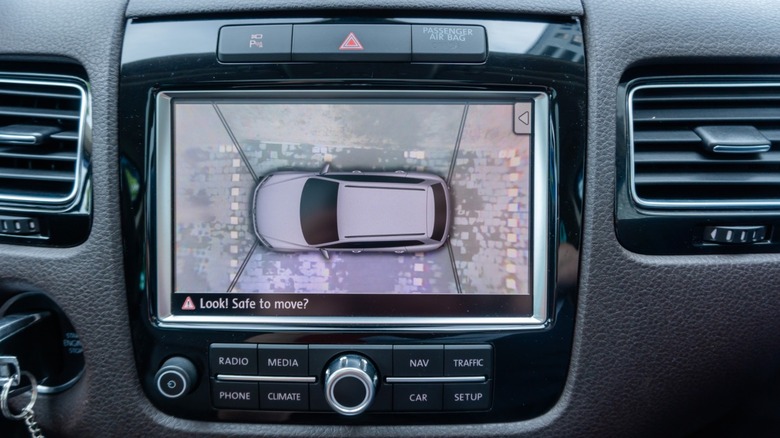
Another problem with eyes that have seen better days (see what we did there?) is that they are more blinded by headlight glare on average. Fortunately, there are plenty of modifications to address this. Self-dimming rear-view mirrors are one example. Most mirrors without this feature can be dimmed by flipping that little tab on the bottom. But the self-dimming feature saves drivers from having to reach for the mirror. You can also get glare-reducing side mirrors, as well. Further, some cars have infrared sensors that can see objects, animals, and people on the road at night and display them on a video screen.
It's not just the eyes that make it hard to see what's going on around the car. It gets harder to crane your neck as you age, too. That's what's great about convex wide-angled mirrors that eliminate blind spots. Of course, many manufacturers offer vehicles with cameras that can see 360 degrees around the vehicle, typically as an optional feature.
Mods for reaching and grabbing

Luza Studios/Getty Images
There's one activity that is almost guaranteed to hurt during old age — moving. We're not talking about moving your furniture into a U-Haul. Movement in general hurts. That's why anything that can shorten a reach or make it easier to grab something can be very helpful for seniors.
Steering, for instance, can be a challenge for arthritic hands. Rubber or silicone steering wheel covers make it easier to grip, though. Steering wheels can also be fitted with spinner knobs or modified for one-handed steering. Steering wheel covers must be fitted properly to the wheel to prevent slippage, and grip knobs are best purchased as highly regulated medical and adaptive driving equipment through companies like Mobility Innovations.
Additionally, push-button ignitions are easier to operate than turning a small key, and there are aftermarket push-button starter kits if your car doesn't already have one. An even simpler solution is a large-handed key turner.
We already mentioned that we can get shorter as we age, as if wrinkles, arthritis, and hair loss weren't bad enough. Fortunately, secondary controls like the wiper, horn, and turn signals can be modified so that they are easier to reach through solutions like secondary control keypads and extension stalks. Pedal extensions often help drivers reach the gas and brake more easily, and voice activation for secondary controls can eliminate having to reach for some controls altogether. If you're a veteran, we found that the Veterans Administration will reimburse for secondary voice activation up to $5,338.
Mods for mobility
24K-Production/Shutterstock
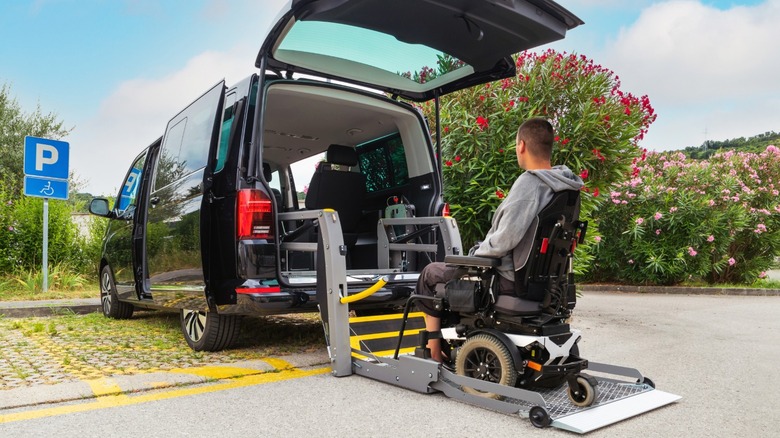
It's interesting to see how technology to assist drivers with disabilities has evolved, as decreased mobility doesn't always mean that you have to give up driving. This technology can benefit seniors who can't use their legs like they used to. Controls for the accelerator and brake can be installed where they can be hand-operated, so that the feet don't have to be used at all. If you only have full use of one foot, control for the gas pedal can be moved to the left.
If you require the use of a wheelchair or mobility scooter, accommodations can be made for these devices, as well. Lifts are available that can load a chair or scooter after you've gotten into the car. There are even whole conversion kits to modify a van so that you can drive it from a wheelchair, including a lift that will get you in the vehicle, brackets to secure the chair and driver, along with steering wheel controls.
If you want to significantly mod your vehicle, it's best to get it done by a professional. Start with an evaluation by a driver rehabilitation specialist, which you can find through the Association for Driver Rehabilitation Specialists. They can figure out what your needs are and point you to the right equipment. The National Mobility Equipment Dealers Association can point you to vehicle manufacturer rebates for your mods. Do a little research, and you'll likely find ways to extend those driving years.
>> Home