Yet more severe weather struck Thursday in the US south-west as the Four Corners region surveyed blown-away roofs, trees knocked on to homes and power lines downed from overnight tornadoes that injured one person.
The injuries weren’t life-threatening but rare for an area better known for scalding heat. But this fall has been unusually soggy in the south-west with El Niño conditions that have sent one tropical system after another in from the Pacific, causing the Grand Canyon and surrounding deserts to rage with floods.
Now, golf ball-size hail and tornadoes have joined the mix. National Weather Service meteorologists suspect at least three tornadoes touched down as storms swept across central Arizona late Wednesday.
The nasty weather hit during Lenna Landy’s yoga routine in Overgaard, a community of about 3,000 people 140 miles (225km) north-east of Phoenix. Landy had ignored alerts about a possible tornado, but then the storm struck.
“It was like Zeus-was-angry kind of level, of thunder cracks,” Landy said.
The power went off, her house shook and Landy couldn’t find her glasses.
“If this is my end, I won’t see it coming,” she recalled thinking. “The scariest part was just like, how quickly it came on.”
The storm peeled off nearby roofs, shattered windows and blew a shed into a home, she said. A spruce tree in her yard was split in half.
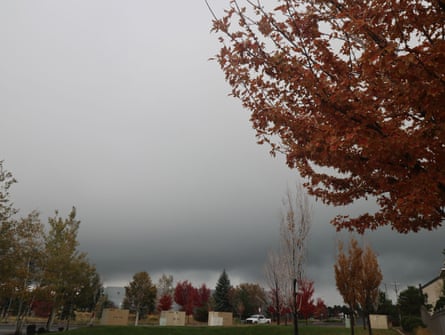
Still more severe weather, including large hail, struck Thursday with much of Arizona under tornado and flood watches. Similar weather soaked New Mexico, while swathes of Utah and Colorado were under flood watches and warnings.
Warm, moist air moving north fuels storms coming in from the California coast. Changing winds can make them spin, creating the conditions for tornadoes, said Ryan Bernhart, a weather service meteorologist in Flagstaff.
“This is very unusual for this area at this time of the year,” Bernhart said.
Tornadoes are somewhat but not exceptionally unusual in Arizona. Notable outbreaks happened in 2019 and 2010.
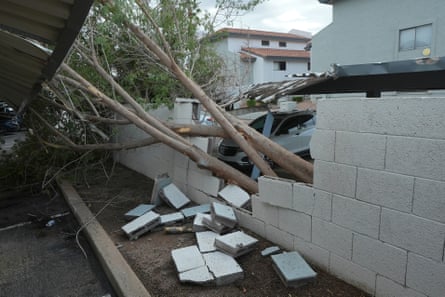
Strong winds toppled trees in Flagstaff and Mesa, with some landing on walls and carports. A few dozen ponderosa pines more than 30ft (9 meters) tall fell down in the Coconino national forest, north-west of Flagstaff.
“These are not small trees that are down,” Bernhart said. “These are pretty strong trees that had been knocked down.”
>> Home