From
4d agoClosing summary

Jakub Krupa
-
Large parts of western Europe are experiencing another extreme heatwave this summer with temperatures in high 30s across Spain and France.
-
High temperatures up to mid-30s are also expected across the south and south-west of England today and tomorrow, with a public health alert in place (10:18).
-
A high temperature warning has also been issued for a dozen counties in the Republic of Ireland (12:00).
-
The heatwave is expected to continue into the next week (13:37), with authorities telling residents to look after vulnerable family and friend members, avoid prolonged heat exposure, and look out for wildfires (10:29, 11:45).
-
The extreme weather is also testing the continent’s infrastructure with a reactor at the Golfech nuclear power plant near Toulouse temporarily shut down due to the ongoing heatwave (13:40).
Stay cool, everyone, and remember: keep drinking fresh water.

If you have any tips, comments or suggestions, email me at [email protected].
I am also on Bluesky at @jakubkrupa.bsky.social and on X at @jakubkrupa.
Key events
4d ago
Closing summary
4d ago
Two out of three secondary students stayed out of school in most affected parts of England during last heatwave
4d ago
More than 300 fires reported in France on Wednesday as extreme temperatures continue
4d ago
France 'not ready' for dangerous consequences of climate change, report warns
4d ago
Europe’s air conditioning culture wars heat up
4d ago
Over 1,700 excess deaths reported in Belgium during last heatwave
4d ago
French nuclear reactor shuts down due to extreme temperatures
4d ago
Heatwave set to continue in France at least until Tuesday, forecaster says
4d ago
Two-thirds of EU faced harmful ozone levels during heatwave, report says
4d ago
Record wildfires in Europe show failure to adapt carries a mounting cost
4d ago
High temperature warning issued for parts of Republic of Ireland
4d ago
Climate change and heatwaves put additional strain on UK hospitals, experts say
4d ago
Another heatwave strikes parts of western Europe - in pictures
4d ago
Europe's June heatwave 'most severe ever recorded,' researchers say
4d ago
Great Britain’s grid operator issues another warning over power supplies in heatwave
4d ago
Morning opening: It's hot, again
Over in France, prime minister Sébastien Lecornu will chair a special emergency meeting on Friday to discuss risks associated with the continuing heatwave in the country, Le Monde reported.
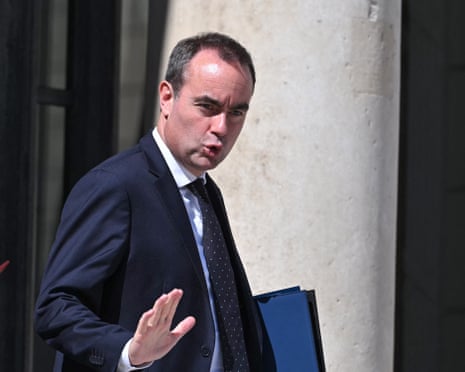
This is after Météo-France warned earlier today that the heatwave is set to continue until “at least 14 July” (13:37).
Two out of three secondary students stayed out of school in most affected parts of England during last heatwave

Richard Adams
Education editor
Two out of three secondary students stayed out of school in the parts of England most affected by the late June heatwave, according to figures released today by the Department for Education.
The attendance data showed that 18% of children nationally were off school on Friday 26 June, around 10 percentage points higher than normal. But the regional breakdown showed significant differences in the south-west and West Midlands, where many state schools closed or restricted their hours at the peak of the heatwave between Wednesday and Friday.
South Gloucestershire, north of Bristol, was the worst affected with more than half of all state school pupils authorised to be absent on 25 June, and 65% of secondary school pupils were absent that day.
Neighbouring Wiltshire saw absences spike to 45% on Thursday before droppingto 21% on Friday as the heatwave moved east. Somerset council also recorded 40% absent on Thursday, while Bristol city had 30% away.
Along the south coast there were also high levels of absence. The Bournemouth and Poole region had 41.5% absent on Thursday, and Brighton and Hove local authority had 49% off.
Meanwhile, school absences in London peaked at 17.5% of pupils, well above normal but relatively low compared to other parts of the south.
Jakub Krupa
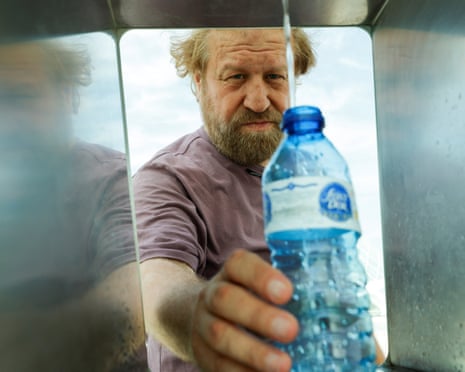
There are parts of Spain reporting 36-39C at the moment, with south-west of France seeing heat of up to 37C.
It’s 33C in London and Paris.
In comparison, 27C in Lisbon looks actually nice!
Stay cool and drink lots of water, everyone.
More than 300 fires reported in France on Wednesday as extreme temperatures continue
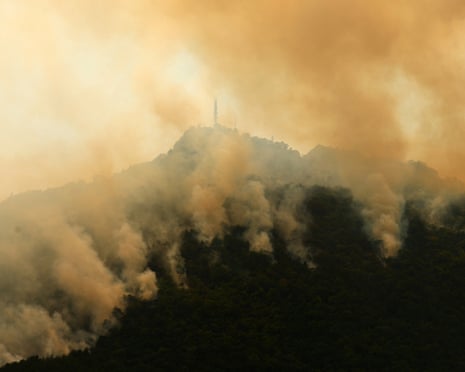
French interior minister Laurent Nuñez said that more than 300 fires were recorded across France on Wednesday as the country continues to battle extreme temperatures and local wildfires.
He also told local authorities to work with the fire and rescue services to mobilise volunteer firefighters, whenever necessary, Le Figaro reported.
France 'not ready' for dangerous consequences of climate change, report warns

Ajit Niranjan
Europe environment correspondent
The transformation of “thermal kettles” into decent housing is a public health imperative, leading French scientists have warned.
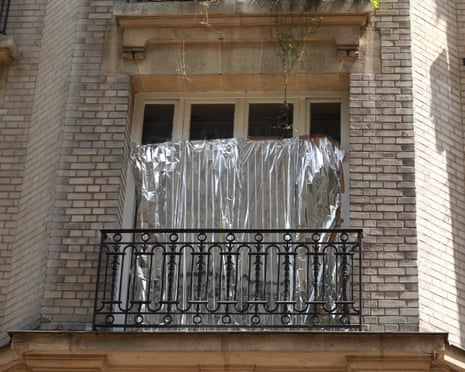
France’s high council on climate, an independent body responsible for evaluating government climate action, urged policymakers on Thursday to improve housing stock and make the creation of shaded green spaces an integral part of urban regeneration.
In hospitals, care homes and schools, it recommended installing shutters, shade structures, ceiling fans, cooling systems, and fixed air-conditioning units.
The annual report, which is in its eighth edition, found France is “not ready” for dangerous consequences of climate change and said current policies were “insufficient” to avoid a sharp uptick in risk.
The scientists lamented the slowdown in climate action and called for a consolidated plan to phase out fossil fuels.
“The cost of inaction is much higher than the cost of the transition,” the authors wrote, “which makes unilateral decarbonisation by major economies a rational choice that brings considerable welfare gains for societies.”
France’s buildings have struggled to cope with temperatures well above the levels they were built for, with nonprofits estimating that more than half of French homes insufficiently protected from heat.
For a taste of how horrifically hot some buildings can get, read this piece from my colleague Angelique Chrisafis during the sweltering June heatwave.
Europe’s air conditioning culture wars heat up
Ajit Niranjan
Europe environment correspondent
As Europe braces for the next bout of scorching weather, its lack of air conditioning has been criticised more than any other solution that governments have been slow to promote.
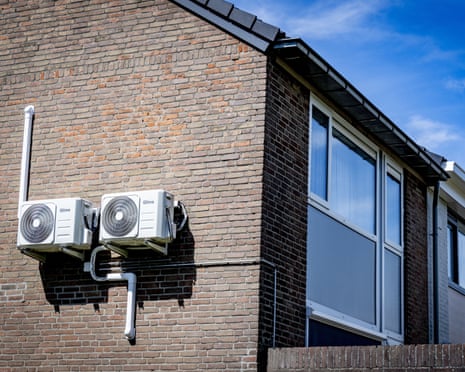
The emerging culture war has frustrated health experts who want more air conditioning for vulnerable groups but are wary of widespread adoption in private homes.
“Much of Europe’s investment has rightly gone into longer-term solutions like shade, insulation and cooling centres, rather than mechanical cooling,” says Hans Kluge, the head of the World Health Organization’s Europe office, which recommends nuanced adoption of air conditioning that protects those at high risk. “Both have a role.”
Efforts to adapt have brought death tolls down by 75% for the kind of heat that was considered extreme two decades ago, studies suggest, but heatwaves have in that time grown even hotter.
More than 200,000 people died from heat in Europe in the last four years, according to WHO estimates, and calls for faster change are mounting.
The record-breaking June heat is likely to yield a death toll in the thousands, if not low tens of thousands – well above the levels that trouble countries such as the US, which is also facing a historic heatwave but uses air conditioning to cool 90% of homes.
Expert advice to install air conditioning in the places where people need it most – hospitals, care homes, schools, and public transport – enjoys support from across the political spectrum. But in recent days, accusations that mainstream parties are blocking air conditioning to save the environment have come to dominate the debate in Germany and France.
Over 1,700 excess deaths reported in Belgium during last heatwave
An intense heatwave in Belgium caused significantly more deaths than usual in June, health authorities said, revising previous figures, the highest excess mortality ever since records began in 2000, AFP reported.
The country saw 1,747 excess deaths during the 18 June to 1 July period, the Sciensano public health institute said, up from the 1,222 estimate for 18-29 June published last week.
That was an excess mortality rate of 47 percent, it said.
Although Belgium did not officially break its temperature records for June, readings hit 35C in Brussels for several consecutive days, and climbed locally to between 38C and 40C.
A new heatwave is expected in Belgium in the coming days, with highs potentially exceeding 30C for five consecutive days starting Saturday, AFP said.
French nuclear reactor shuts down due to extreme temperatures
A reactor at the Golfech nuclear power plant near Toulouse has been temporarily shut down due to the ongoing heatwave, AFP reported.
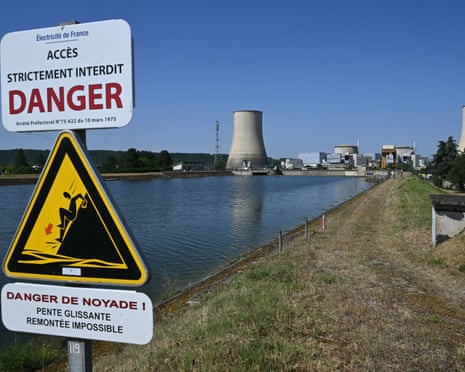
“The weather conditions of the last few days have led to a significant rise in the temperature of the [river] Garonne, which is expected to reach 28C this Friday,” EDF said in its press release.
The plant’s second reactor was also shut down for maintenance, it said.
Heatwave set to continue in France at least until Tuesday, forecaster says
Météo-France has warned that the heatwave is set to continue until “at least 14 July,” with “a possible gradual drop in temperatures” in the coming days.
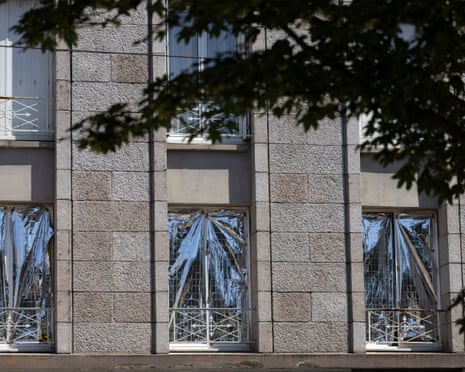
It further cautioned about expected sleep disruption due to hot nights, saying that a record-high night temperature of 30C was reported at Cap Béar (Pyrénées-Orientales) last night.
In a bit of an understatement, it said: “Night-time temperatures exceeding 30C are rare in France.”
It further added that “the risk of forest fires remained high to very high across much of the country.”
It’s currently 36C in Bordeaux, 35C in Toulouse, 34C in Rennes, and 32C in Paris.
Two-thirds of EU faced harmful ozone levels during heatwave, report says
Two-thirds of the European Union’s population may have been exposed to harmful levels of ozone pollution during last month’s record-breaking heatwave, a report exclusively shared with AFP warned Thursday.
Nearly 300 million people, including 100 million children and elderly people, faced higher-than-recommended levels of the toxic pollutant during the punishing heat in late June, according to the report from the NGO Global Witness.
The scale of this “invisible threat” highlights how “people are being forced to live through very dangerous conditions as a result of our dependence on fossil fuels,” the organisation’s senior campaigner Flossie Boyd told AFP.

Record wildfires in Europe show failure to adapt carries a mounting cost
Ajit Niranjan
Europe environment correspondent
When storm after storm battered the Mediterranean at the start of the year, drowning fields and sending water spurting from plug sockets, few people were fretting about fires.
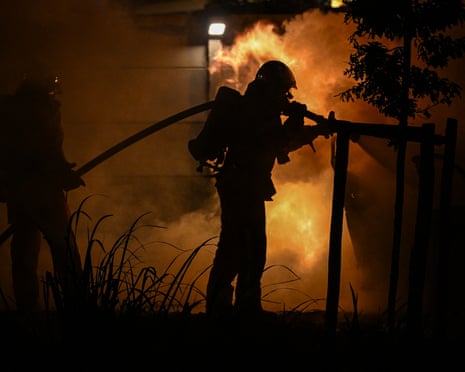
But just four months later, the murky brown floods that swamped towns and fouled homes across western Europe have given way to angry red blazes and choking black smoke. Rampant wildfires burned 28,000 hectares (69,160 acres) in France and 50,000 hectares in Spain as of 1 July, more than double the average for that time of year, and more land has been charred by bigger fires in the week since.
Scientists have found the record-breaking heat that scorched Europe in June would have been “virtually impossible” if the climate had not been warped by burning fossil fuels, with daytime highs 10 times more likely than just two decades ago, and night-time lows 100 times more likely. Now, they are wondering if the early rains, too, contributed to the fires.
In Spain, the hot start to the summer was preceded by a rain-heavy winter and spring that helped plants grow. In much of the country, surface soil moisture was above the seasonal average from March to May, data from Copernicus shows, as well as unusually high river flow driven by an “exceptionally wet winter” in the Iberian peninsula.
But when a freak heatwave hit western Europe in late May, followed by an even more punishing one at the end of June, the extra vegetation dried up fast. Scientists have cited the combination of a wet spring and hot summer as a factor in Spain’s record-breaking wildfire season last year, finding that high vegetation water content – which at first reduced fire potential – was lost during long heatwaves, leaving behind an extensive fuel surplus.
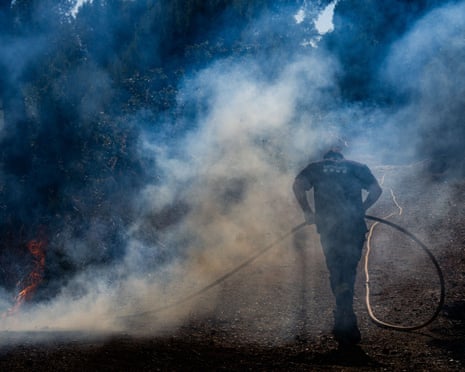
Climate breakdown can worsen weather extremes in unexpected ways. Long periods of dry weather can make torrential downpours more likely to result in flash floods, as water runs off hard soils instead of soaking into it, while hot weather lets heavy rain pack more punch as warm air can hold more moisture.