Matt Gush/Shutterstock
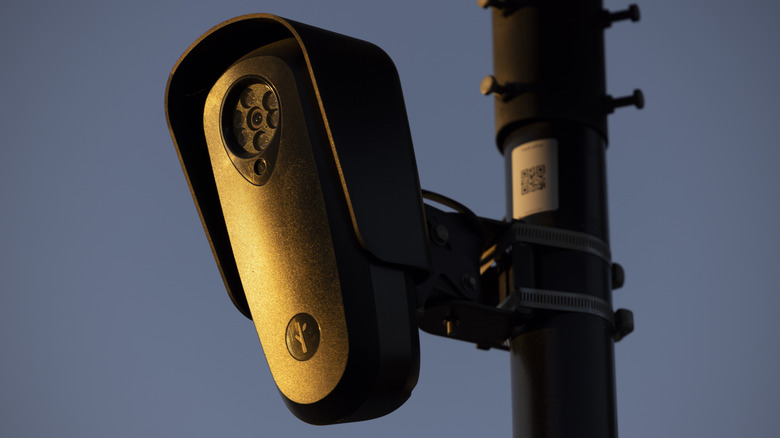
As people continue to damage, deface, and destroy Flock cameras, as well as pursue legal means to get cameras removed, Flock Safety has a problem. It's not that it's creating a surveillance state (even though it is), but that as people rise up against the lack of regulatory guardrails on this type of surveillance, the company is losing customers, and therefore losing money. To ostensibly patch this wound, Flock has done something it should have done a long time ago, announcing new measures it's taking to improve its privacy, accountability, security, and transparency. Let's take a look at these changes, with a critical eye, of course.
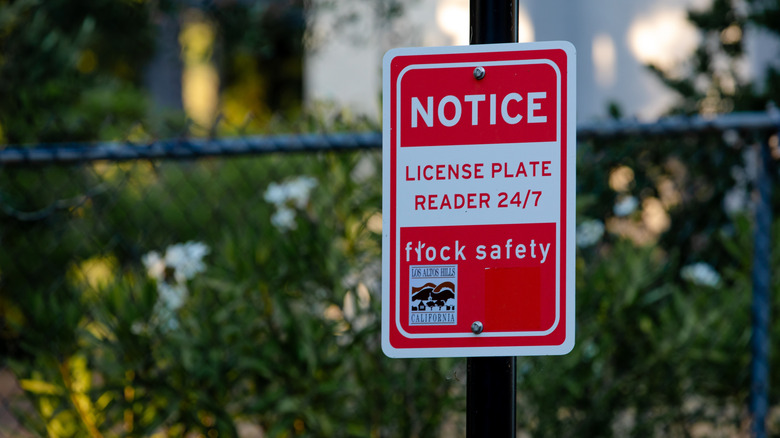
The most notable change is that Flock is changing its default data retention period from 30 days to seven. That means all those pictures of your license plate and other identifying data will be purged from the database much sooner — that is, if the customer has accepted the default settings. That's the kicker right there. The customer has always been able to set any retention period they want, within their state's legal limits, if there are any. Current customers won't be asked to change their retention periods, and the new default only applies to new customers.
Flock changing the default from 30 to seven days makes a great headline, but is little more than lipstick on a pig, since the customer ultimately has control. Flock makes a big deal out of this, even dedicating an entire section of its announcement to customers owning their data, not Flock. It also gives Flock a way to sidestep accountability, passing the buck to customers for use and misuse of the data that Flock provides.
Something old, something new
Even if Flock's newly recommended seven-day data retention limit is accepted, a customer can override it using Evidence Mode, which can preserve ALPR data being used in an active investigation beyond this limit. There's a legitimate use for this, since police investigations can take weeks, months, or even years. On the other hand, Flock also says that "over 90% of searches without a full plate are done within a week." This means police departments can also make themselves look good by reducing their official data retention period while still keeping access to the data they actually need.
One genuinely positive change in Flock's system is the new feature "Offense filtering for sharing." Customers can currently choose whether to share all of their data with other agencies, or none at all, like an on/off switch. This feature will allow them to share only data associated with specific offenses. For example, they could choose to share data for violent crime suspects with other departments, but disable it for traffic violations or immigration enforcement. This way, police have more ability to find a balance between apprehending dangerous criminals and invading privacy. It's not a solution, but it's a step in the right direction.
Another step is the Flock Transparency Portal. Flock is encouraging customers to enable this feature to show the public exactly how it uses the system and its data. This portal page for Jacksonville, Arkansas, a suburb of Little Rock, is a good example, showing the number of cameras in town, searches, who data is shared with and from, and policies about what uses of this data are and are not allowed. This is not a new feature, but one that Flock is pushing in the interest of transparency, but also in the face of protests and negative press.
Garbage in, garbage out
bluestork/Shutterstock
One of the main reasons for those protests and negative press has been mistakes involving Flock cameras. Flock's announcement even mentions how "A recent story described a wrongful traffic stop involving an auto journalist." Flock has doubled down on its claims of ALPR accuracy, claiming that its system makes "fewer than 9 human-reported errors for every 1 million alerts." The town of Roseville, California, would very likely disagree with those numbers, with its own analysis determining only a 29% accuracy rate. This is unusually low, but even if Flock's previous claim of 99% accuracy across 20 billion scans per month is realistic, that still means there are 200 million inaccurate scans every month, which is a pretty big number.
Flock also points out that many of the issues in the news recently are not the fault of its technology, but rather incorrect data and officer actions. While Flock doesn't get to dodge all of the responsibility, since its system is what makes all this possible, it is correct that many of the issues are the result of data errors and officers not verifying a match before pulling someone over. Flock Safety CEO Garrett Langley is quite clear on this in Flock's video, and in this case he's absolutely right:
An unverified ALPR alert alone is not a lawful basis for a stop. Officers should verify that the vehicle matches the alert, that the alert is still active prior to taking any type of enforcement action.
Who watches the watchers?

Frame Stock Footage/Shutterstock
Finally, there's the issue of police abusing the system for unlawful purposes. Flock makes it way too easy to stalk someone's movements, whether for a legitimate investigation or to spy on an ex. Langley points out that police have been using other systems to abuse their power in the past, too. He's right about that, but that doesn't diminish how much more data is available to officers now, and many of them can't seem to stop themselves from misusing Flock's system in particular. So Flock is doing something about it:
16 weeks ago, we introduced Audit Assistance, which detects abnormal activity and flags it for Administrator review. In recent weeks, those reviews have been associated with arrests of several law enforcement officers who allegedly abused the system.
Previously an optional feature, Flock is now requiring police departments to enable it before the end of 2026. Entering case codes associated with searches, another formerly optional feature, will also become mandatory, except for emergency situations that will automatically be flagged for review.
All of this still relies on police departments doing the right thing rather than protecting their own. Flock is also introducing proactive lockout of user accounts suspected of abnormal behavior. Flock will take this action on its own, requiring department administrators to review account activity and choose whether to reinstate the account. Again, the department gets to make the choice, but the proactive lockout might help prevent a bad situation from getting worse.
None of this changes the fact that we now have several privately owned surveillance networks, not just Flock, with little or no regulatory oversight, providing law enforcement with unprecedented powers that the people who wrote the Fourth Amendment could never have imagined. The genie is already out of the bottle, and will be quite difficult to put back in, if that's even possible at all. Some guardrails and safeguards are better than none, even if it took nothing short of a public outcry, bad press, and lost customers to get them.
>> Home