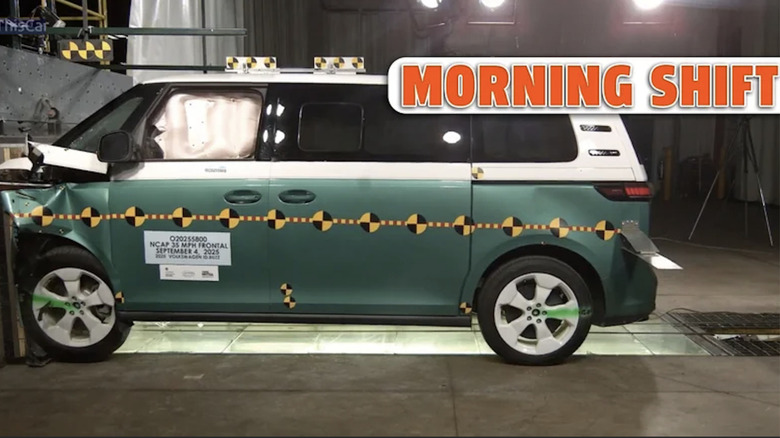
YesThisCar (YTC) via YouTube
Good morning! It's Friday, September 25, 2026, and this is The Morning Shift, your daily roundup of the top automotive headlines from around the world, in one place. This is where you'll find the most important stories that are shaping the way Americans drive and get around.
In this morning's edition, Volkswagen is making the U.S. wait for an entire second model year for the ID Buzz to make its grand return to our shores (it shouldn't), Tesla has finally begun Semi deliveries after years of delays, the two U.S. Senators heading up the Chinese EV ban bill are going to wait to vote on their effort for another week and Tesla's Full Self-Driving system is misreading speed limits in Belgium.
If you'd like a recap of the latest auto news sent to your inbox each weekday, you can sign up for Jalopnik's free Morning Shift newsletter here.
1st Gear: Volkswagen gives up on a 2027 ID Buzz in the U.S.
Kevin Carter/Getty Images
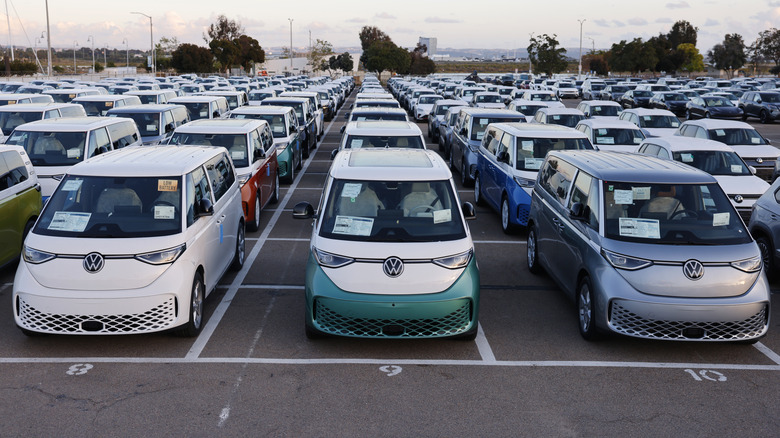
It's well documented that I am no fan of the Volkswagen ID Buzz. In the past, I've called it cheesy Boomer-bait, a heap and a car I'd erase from history if I had the chance, so it gives me great pleasure to let you all know that we'll be free from its disingenuous "flower power while also building parts for the Iron Dome" looks for a little while longer. Due to the shockingly good taste of American consumers, VW pulled the ID Buzz for the 2026 model year, saying it would return for 2027. Welp, that's not happening now.
Despite the fact that in May VW said it would be back for MY27 with new paint options, more physical buttons, a NACS charger and a new Tourer trim for van-life goobers, that plan is now out the window. Volkswagen has decided to skip the 2027 model year as well, and the mediocre-at-best electric van will make its grand return for the 2028 model year with those updates, along with some new software, vehicle-to-load functionality and digital key integration. That's sure to fix it. From Automotive News:
VW said it will share additional details about the ID Buzz in the months ahead.
VW in December said it was skipping the 2026 model year in the U.S. but emphasized it was not killing the nameplate.
The ID Buzz, built in Germany and launched in the U.S. in November 2024, has faced multiple hurdles. It was the most expensive vehicle VW sold in the U.S., with a range of just over 200 miles, features that have limited its appeal, analysts say.
It has also been subject to high U.S. import tariffs since spring 2025, two embarrassing recalls and the elimination of the $7,500 federal tax credit toward an EV purchase.
[...]
The 2025 model year sell down appears to be nearly complete. Cars.com lists just 38 new vehicles nationwide with a majority being either single-tone silver or black.
During its first full year on sale, VW delivered 6,140 ID Buzz vans, as volume was hit hard by two stop-sale orders. In the first half of 2026, a further 2,481 vans were moved.
We should expect to see this thing finally start showing up again sometime during the first half of 2027, but who really knows?
2nd Gear: The Tesla Semi is finally being delivered, right on time, seven years late
Tesla
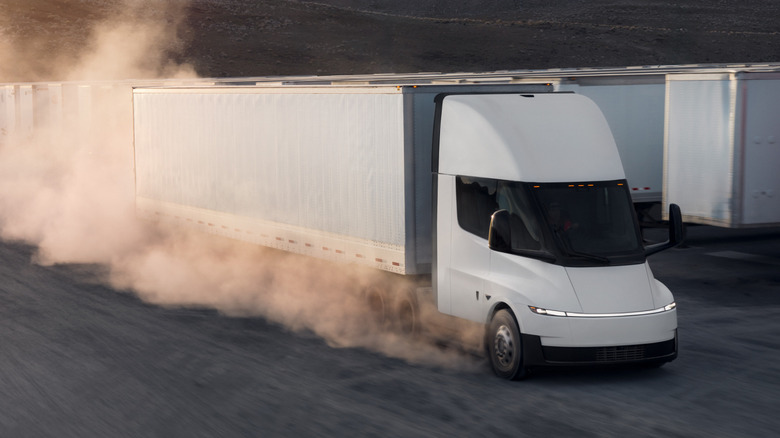
At long last, Tesla has started deliveries of its Semi truck to customers this week. It comes almost nine years after CEO Elon Musk unveiled the all-electric big rigs, and seven years after he promised production would start. Of course, details on the Semi are still murky at best. There's still no word on production volume plans or even how much the damn thing is set to cost.
Obviously, the Semi isn't even front-of-mind for CEO Elon Musk, who couldn't even be bothered to show up to the truck's delivery webcast event. Instead, he could only offer a recorded video message, in which he said, "I'd recommend placing more orders if you haven't already, but the waiting list is already pretty significant." From Reuters:
Customers, including PepsiCo, DHL and US Foods, were invited on stage, and trucks with their logos were shown parked outside.
The long-range variant, loaded, can drive 500 miles with one charge. "That's 500 real-world miles. Our customers have validated it," said Dan Priestley, Tesla's director of Semi truck engineering. A standard variant has 325 miles of range.
The Semi was first unveiled in 2017 and production was expected to start in 2019.
The first truck eventually rolled off the high-volume production line in April and volume production was set to start this year. However, Tesla's July shareholder letter said that production of Semi would begin in 2026, removing an earlier forecast for volume production this year.
You're not crazy to think Tesla already delivered a Semi. Technically, it did, but that was just a prototype. Back in 2022, it began a limited run of deliveries to customers, including PepsiCo, but delays, rising competition and the derailment of EV policies in the U.S. have hindered demand.
Despite that, Tesla this week got an order for 2,500 Semis from a group of the world's largest cargo-owning shippers, including Microsoft and PepsiCo. That would nearly double the existing U.S. fleet of electric Class 8 trucks, and last month, Swedish freight company Einride AB announced a deal to add 500 Semis to its fleet.
3rd Gear: Senate pushes Chinese cars ban vote
Finn Gomez/Getty Images
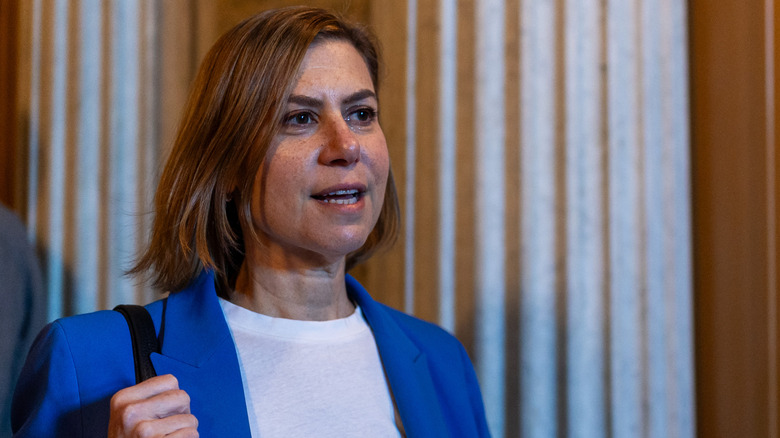
Just yesterday, we told you about how Ohio Republican Senator Bernie Moreno and Michigan Democratic Senator Elissa Slotkin were looking to fast-track their bill to permanently ban Chinese vehicles from being sold in the U.S. via unanimous consent. Welp, they're slowing things down a bit in order to get the support of the lone holdout in the Senate and will try again next week. Can you believe there's one person out of the 100 in the Senate who is okay with Chinese cars on our shores? Wild.
That lone holdout? Kentucky Republican Senator and goober, Rand Paul. He's apparently told reporters that he'd continue to discuss his concerns about the bill over the weekend and next week. From Reuters:
Moreno said he was hopeful the bill would be approved next week and the same legislation passed in November when the US House of Representatives returns to session.
China is making nearly four times as many cars as the United States, Moreno said, adding Congress needs to make certain that hundreds of thousands of US auto jobs are not at risk of "total domination" by Chinese car companies.
Earlier, Slotkin had said all Democrats support moving ahead and only one Republican opposes the measure. "My understanding is it's 99 to 1," she said.
Under the fast-track procedure, a single opponent could block approval.
The bill has significant momentum and a House version now tops 100 co-sponsors, while automakers and legislative aides hope to win full passage this year.
Trump's meeting with Xi will address a wide range of trade issues. China has strongly opposed the US vehicle ban and efforts to make it permanent.
"I think if President Trump allows in these Chinese companies, it is beginning of the end of the auto industry in the United States," Slotkin, of Michigan, said.
[...]
A regulation imposed by former President Joe Biden's administration in early 2025 effectively banned all Chinese automakers from selling or building passenger vehicles in the US because they could send sensitive driver data to China. Washington also maintains more than 100% tariffs on Chinese electric vehicles.
Senator Ted Cruz said earlier that the bill would ban companies with more than 15% ownership from Chinese entities from selling vehicles in the US. That could bar Mercedes-Benz because of Chinese investors' nearly 20% stake. Moreno said Mercedes-Benz would have until 2030 to comply and could still get waivers if needed.
Slotkin said there were ongoing conversations about how Mercedes could comply.
The bill, which has 51 Senate supporters, would make the ban into law and prevent the White House from issuing waivers to Chinese manufacturers to sell vehicles in the United States.
Earlier this month, Trump shot from the hip, telling FOX News he'd accept Chinese car companies building cars in the U.S. Believe it or not, this freaked out a lot of automakers that have spent the better part of two years doing their best to curry favor with him. In a letter sent by a contingent of automakers, suppliers and dealers to the President last week, they urged him to "maintain policies that keep the door firmly shut to Chinese automakers seeking to sell, import or manufacture vehicles inside the US."
4th Gear: Tesla FSD is misreading speed limits in Belgium
Alexander Shapovalov/Getty Images
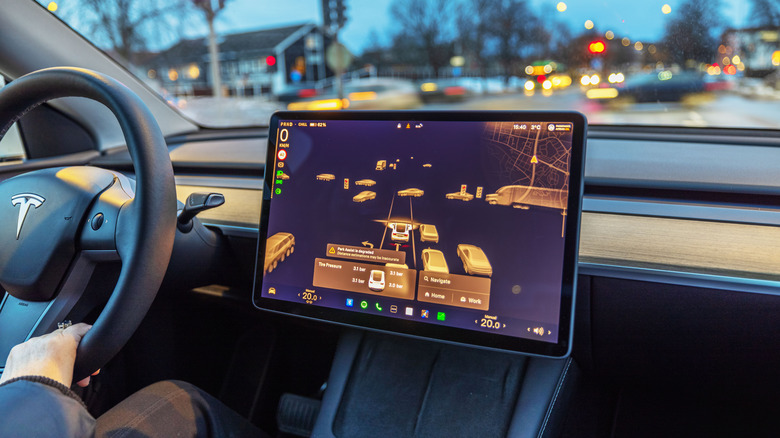
Tesla's Full Self-Driving Level 2 driver assistance system frequently exceeds speed limits and attempts to overtake cyclists on streets where it's not allowed, according to a pedestrian and cyclists road-safety advocacy group in Belgium called Johanna.be. They tested a Tesla's system over 3 days in July — covering about 250 miles — and found that FSD often exceeds speed limits in 20 and 30 km/h zones, and the car will even incorrectly display higher speed limits to the driver.
Dutch regulator RDW first approved the system for use on the country's roads in April, with Belgium and a number of other European countries following suit. There's an EU-wide vote that could happen on October 6. From Reuters:
Several EU countries, including Sweden, have expressed concerns about FSD exceeding speed limits, while countries that approved it say drivers remain responsible for complying with traffic laws.
[...]
RDW said it had received the report and would consider it as part of its applicable monitoring and surveillance processes, adding that conclusions about vehicle systems require "a thorough evaluation of all relevant information and context".
Tesla released a study earlier this month saying that FSD-enabled Teslas do not speed excessively and drive at speeds matching surrounding traffic.
Lesenne said data from Tesla shows the technology "holds significant potential for accident prevention today".
Johanna.be found that FSD exceeded the limit in the majority of the tested 30 km/h road segments around Brussels, averaging 44 km/h.
Even though the vehicle's screen showed the system recognised 30 km/h speed-limit signs on the roadside, it often displayed an incorrect speed limit of 50 km/h.
"It is akin to a passenger constantly reassuring the driver that the speed limit is 50 km/h in nearly every 30-zone through which they pass," the report said.
Videos collected by the group show the FSD-enabled Tesla attempting to overtake cyclists on streets where doing so is not allowed.
The European Transport Safety Council has previously raised concerns about whether FSD can comply with differing road rules across Europe.
To FSD's credit (bleh) Johanna.be also noted some positive aspects about the system, saying it "behaved cautiously and courteously around pedestrians and cyclists, often yielding proactively." However, it contends that those positives don't "offset the documented failures to comply with speed limits and cycle-street regulations."
Reverse: I guess nobody told the FLDS
 History.com
Fine, I'll watch yet another documentary about Mormon fundamentalists. You win. Also, while we're on the subject, "Church of Jesus Christ of Latter-day Saints" is just so clunky. We've got to clean it up. Anyway, if you want to learn more about this somehow controversial decision, head over to History.com.
The Fuel Up
Brandon Bell/Getty Images
We've got a bit of a mixed bag when it comes to fuel prices today. Gasoline is up ever-so-slightly while diesel is down ever-so-slightly. I'm not exactly sure what that's about, but I've got a feeling it's just a brief respite before a spike, as the Houthis have stepped up their attacks on Saudi Arabia. Now, we're seeing a slight rise in both WTI Crude Oil futures and Brent Crude prices, which were sitting a $93 and $105, respectively, at the time of publication.
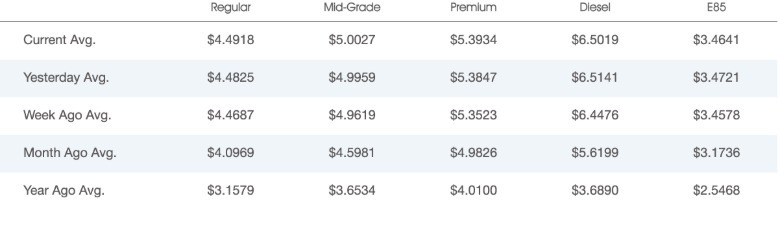
Here's where national average prices stand right now, according to AAA:
 AAA
AAA
This all shakes out to the average price of a gallon of regular gas going up another cent overnight to $4.40, according to AAA — inching ever-closer to the 2026-high of $4.56 that we saw back in May. Diesel, for its part, was actually down to $6.50 — down 3 entire cents from its all-time high set three days ago.
On the radio: David Byrne - Everybody's Coming To My House
Yeah, I'm still very much on my David Byrne kick after seeing him perform at Forest Hills last Saturday. Obviously, the classic stuff he did as part of Talking Heads is always going to be amazing. There's no doubt about that, but even his more modern music is excellent, which isn't always something you can say about the music of older musicians.
>> Home