Shortly after 1am one night in April 2019, a CIA officer on a work trip to London was jolted awake in his hotel room by the most intense head pain he had ever experienced. His body was soaked with sweat and he felt like his eyes were spinning in their sockets. He manoeuvred his way out of bed, hoping to make it to the bathroom to vomit, but found his sense of balance had deserted him. Eventually, he fell back into a fitful, shallow sleep.
The next day, arriving at the work meeting he had travelled for, the officer found he could not remember the names of colleagues in the room, people he knew well. As the meeting got under way, he could barely follow the discussion. Initially, he chalked it up to a terrible – if rather odd – case of food poisoning. But over subsequent weeks, worrying symptoms persisted: brain fog, loss of balance and increasingly harsh tinnitus.
By September, he had started to feel better and was on another work trip, this time to Poland. Asleep in his Warsaw hotel room, he was again woken by terrifying head pain, even worse than in London. He later described the sensation as “someone standing over me with a baseball bat and just repeatedly hitting me on the head”. It was a nine or 10 on the pain scale, he felt, worse than anything he could remember.
Two hours later, the same feeling returned, and he started to suspect that what was happening might not be an internal process but rather some external attack. He dragged himself off the bed and curled up on the floor, where the intense pain subsided somewhat. That was the last time he had the “attack” sensation, but he went on to suffer chronic nerve pain, fatigue and other severe health problems for years.

Sources described the man in question as a senior CIA officer who had recently been assigned an important job relating to worldwide operations against Russia. At the time, he was only vaguely aware of the stories that had emerged from Cuba two years previously, about US diplomats who believed they may have been attacked with a sonic weapon.
These incidents, in which people reported feeling a variety of unusual sounds, pressure and pain, followed by residual symptoms that could last for years, had acquired the name Havana syndrome, after the city where mass reports of the phenomenon first emerged.
Later, dozens of CIA officers around the world reported Havana syndrome episodes, which in official documents were called anomalous health incidents (AHIs). Many believed AHIs were the result of a Russian intelligence operation to wound or intimidate covert US operatives using a previously unknown weapon that delivered sonic or pulsed microwave energy.
There was sustained pushback against that theory. Some scientists insisted the idea of a portable weapon that could deliver these injuries belonged in the realm of science fiction. They said a whole range of conditions could cause pain, dizziness and cognitive issues.
Various experts suggested AHIs could be down to environmental factors, toxins or even the sound of chirping crickets. One explanation was that the symptoms were psychogenic and the result of “mass hysteria”, while some inside the CIA even accused those involved of faking their injuries in the hope of a medical payout. The disagreements over what was causing Havana syndrome led to bitter arguments and broken friendships at the spy agency.
In 2022, a panel of scientific experts convened by the US government concluded that “the signs and symptoms of AHIs are genuine and compelling” and “could be due to external stimuli”.
But the next year, a long-awaited report delivered the official assessment of the US intelligence community: “The available intelligence consistently points against the involvement of US adversaries in causing the reported incidents,” read an unclassified summary. It was “very unlikely” that a sinister Russian campaign was behind AHIs, it concluded.
Yet the mystery of Havana syndrome refuses to die. This summer, the “very unlikely” assessment from 2023 was rescinded by Donald Trump’s outgoing director of national intelligence, who claimed it was based on flawed analysis.
Now, a decade after the first reports emerged from Havana, two CBS journalists who have covered the story from the start are to release a book that sets out the case for Russia being behind at least some of the episodes. It also accuses parts of the US government and intelligence community of covering up the evidence.
This article is based on early access to their findings, as well as on the Guardian’s own interviews with intelligence sources, AHI patients and scientists.
David Relman, the Stanford professor who led the official scientific panel on Havana syndrome in 2022, told the Guardian he believed there was a subset of AHI cases that were “most plausibly explained by exposure to pulsed microwave energy”.
His panel had access to patient records and to more than 1,000 classified documents on the topic. “To any reasonable person looking at all the evidence I was able to see, it inevitably leads to the conclusion that there may have been a cover-up,” he said.
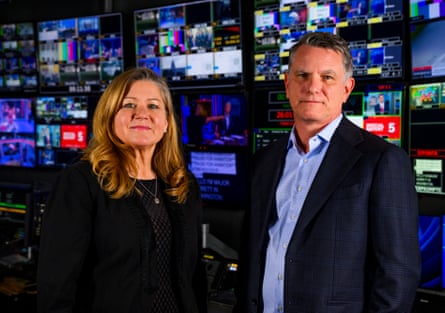
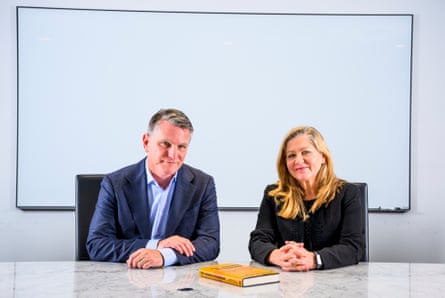
Michael Rey and Oriana Zill de Granados are longstanding producers for the CBS programme 60 Minutes. In an interview at the programme’s studios in midtown Manhattan, the pair recounted how they first came across the story a decade ago.
They covered the Obama administration’s policy of re-establishing diplomatic relations with Cuba in 2015, so when reports emerged the next year of a mysterious new condition afflicting employees at the reopened embassy in Havana, they contacted a senior US diplomat who had been posted there. “I expected him to say: ‘This is all bullshit,’” said Zill. “But he said: ‘Oh no, this is completely true. And I can put you in touch with a bunch of people who were hit.’”
The pair spoke to more than a dozen of them, off the record, but by the time they were ready to put a story together there were new reports of similar cases occurring among US diplomats stationed in China. Then there were whispers about it happening in other locations around the world.
Once the first 60 Minutes episodes devoted to the topic aired, victims started contacting the producers, keen to tell their stories. Many of these new sources were – or had been – undercover operatives for the CIA, meaning they could not speak openly as most details of their work were classified. But people stationed around the world who had not known each other told stories that seemed remarkably similar.
A pattern linked some of the key cases: the alleged victims were working, or had previously worked, on beats where they rubbed up against Russian interests.
In some cases, the location of the supposed hits was notable in itself: allies of Moscow where some part of the elite was looking to improve relations with the west. This was the case in Cuba, where the original cluster of cases had come during the Obama-era thaw in relations with the US, which had irritated hardliners in the Cuban regime and their backers in Moscow.
It was also the case in Georgia, Kyrgyzstan, Serbia and Vietnam. Several CIA officers who had been stationed in Kyiv around the time of the 2014 Maidan revolution in Ukraine, decried by the Russian president, Vladimir Putin, as a US-backed coup, later suffered AHIs in different locations across the world.
“I went through years of doubts about the story, and all the crazy things we were hearing,” said Zill. But the more source meetings she and Rey had, the more they felt there really was something there. “We’re meeting these highly effective intelligence officers and they’re all telling versions of the same story,” said Rey.
The origins of Havana syndrome go back long before Cuba. A cornerstone case is that of Mike Beck, a counter-intelligence officer at the National Security Agency who got sick while on temporary assignment to an undisclosed location in the 1990s to check a US diplomatic facility for bugs.
Beck developed a rare form of Parkinson’s disease at the age of 45 and died this year. A declassified NSA statement, included in his 2014 workplace compensation claim, noted that “there is intelligence information from 2012 associating the hostile country to which Mr Beck travelled in the late 1990s with a high-powered microwave system weapon that may have the ability to weaken, intimidate or kill an enemy, over time, and without leaving evidence”. The unnamed “hostile country”, sources said, was Russia.
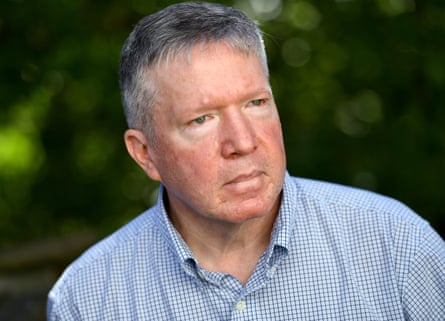
The first known AHIs among the contemporary batch of cases occurred in late 2014, when several US government employees at the consulate in Frankfurt, Germany, became ill. One was found unconscious in a consulate stairwell after feeling sudden, intense pressure on her chest and hearing a “high-pitched squeal”, Rey and Zill reported.
The next year, a researcher at a US defence institute – who asked the Guardian not to use her name – was on a tour of the Balkans, attending meetings with military officers from the host nations alongside US defence attaches. Her itinerary took in Montenegro, which was in the process of applying for Nato membership, and Serbia, a Russian ally that harboured resentments towards the US over the 1999 Nato bombing of Yugoslavia.
On her final evening in Belgrade, as she walked through lively pedestrianised streets to her hotel, the researcher was sure she spotted someone following her. Later, as she approached her hotel room, she felt “a sinking feeling, as though I was in a lift that was descending suddenly”, she recalled in a telephone interview.
Inside her room, she continued to feel odd sensations. “I just had this falling sensation, a feeling of gravity pulling at me, and nausea.” At one point, she turned on her government laptop and found the screen was flickering with blue static. The computer never worked again.
She said she was able to continue her trip, but in the subsequent weeks she felt weak, had difficulty speaking clearly and developed pain that felt “like a drill was going into my eye”. She was unable to focus at work. “I used up all my vacation, then my sick leave, then colleagues donated their leave. Eventually, I had to leave my job,” she said. It was only much later that she connected what had happened to her with reports about Havana syndrome.
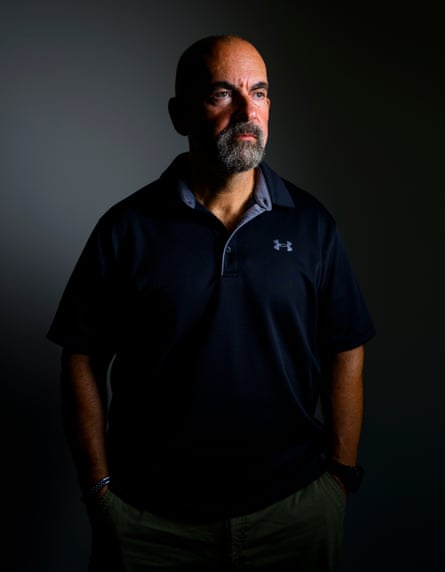
The next cohort of AHI patients included people at the heart of a new CIA policy on Russia. In 2017, as Donald Trump took office for the first time, the agency launched a drive to push back against the increasingly brazen global reach of Moscow’s intelligence agencies.
“They wanted us to take the same kind of tactics and spirit we used in the global war on terror to the Russians,” said Marc Polymeropoulos, who was made deputy chief of operations for Europe and Eurasia in 2017. Polymeropoulos, who had spent most of his career in the Middle East, was one of several veterans of the “war on terror” who were moved to senior roles focused on Russia. Even as Trump publicly denied that Russia had interfered in the 2016 election, the agency made plans to push back hard against Russian activity.
“Obviously, we didn’t have permission to run lethal operations against the Russians, but we could do things we hadn’t done as much previously, such as enlist the help of multiple friendly services and expose the Russians for what they were doing,” said Polymeropoulos, in an interview at a restaurant just outside Washington.
In early December 2017, Polymeropoulos and another senior CIA executive made a liaison trip to Moscow, to meet their counterparts in Russia’s SVR and FSB intelligence services. The official meetings were ill-tempered and lacking in substance. Late one night, Polymeropoulos woke up suddenly in his hotel room. “I had vertigo and a splitting headache. I thought it was food poisoning at first, I thought I was going to puke and crap my brains out, and I remember being like, holy shit, the room is spinning and my ears are ringing,” he said.
On his return to Washington, Polymeropoulos struggled with a persistent migraine that would not subside, and with superiors who insisted his symptoms were unrelated to other AHIs. He saw a variety of doctors on his own time, but owing to the classified nature of his job he could not share details of where he had been when he became ill.
He left the CIA in 2019 and, frustrated at being stonewalled in his requests for medical assessment, became the first CIA officer to go public with a Havana syndrome story under their real name, telling the journalist Julia Ioffe about what happened in Moscow.
The resulting publicity prompted the CIA to send him to the Walter Reed military medical centre, where he was diagnosed with mild traumatic brain injury. In 2023 he was found eligible for compensation under the Havana Act, which authorised payments to “personnel who incur brain injuries from hostilities while on assignment”. The financial payout was modest, but he saw it as a moral victory after years of fighting for recognition.
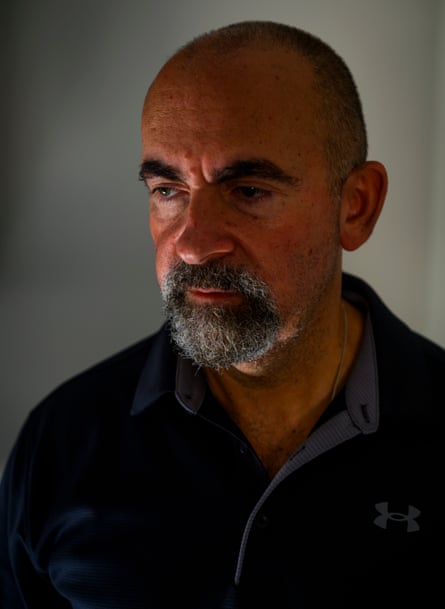
One early theory was that AHIs could be the result of data collection attempts gone wrong – a machine designed to pull classified data from operatives’ electronic devices that had unfortunate side-effects when turned up too high. That is still seen by some as a possibility, although even if intelligence collection was the initial idea, the damaging health effects would have quickly become apparent to the operators.
Some observers insisted the whole concept of “Havana syndrome” was an invention. They asked why, if Russia possessed a brain-frying weapon, it was not using it on a wider range of its enemies. Why were there not more reports of collateral victims?
The sociologist Robert Bartholomew and the neurologist Robert Baloh co-authored a book that declared the whole story a hoax – “a case study in the social construction of mass psychogenic illness” – borne of high-stress work environments and propagated by excitable journalists.
Douglas Fields, a cellular neuroscientist and author of several books about the brain, claimed in a journal article that the medical studies of patients which showed cognitive changes had used unsound methodology, and that theories of an energy weapon “defy the laws of physics”. Reports of Havana syndrome should be taken no more seriously than sightings of the Loch Ness monster, he suggested.
Other scientists, including some who had reviewed patients’ medical records, strongly disagreed. “The early scepticism was perfectly appropriate, but over time we started to see an increase in the number of individuals who have gone through clinical evaluations that cannot be faked,” said James Giordano, a professor emeritus of neurology at Georgetown University Medical Center and the forensic neuroscientist on the original cohort of cases from Havana.
“We are talking about objective signs that are presenting with a very distinct pattern,” Giordano said. Key symptoms included “a profound tumbling or falling sensation” as well as pressure in the head, chest and throat, and cognitive effects. It was true that chemical or drug exposure could cause similar symptoms, he said, but this would be visible on blood tests. Another key factor was the sudden onset and the sense of a specific location where the apparent attack felt strongest.
When the Biden administration took office in 2021, the then CIA director, Bill Burns, and the director of national intelligence, Avril Haines, vowed to get to the bottom of the issue. Burns met many of the AHI cohort, including Polymeropoulos, listening carefully to their stories and promising them a full investigation.
Burns also fired the CIA’s chief medical officer, who had infuriated some AHI patients by accusing them of faking their symptoms. The same year, more than 100 CIA operatives and other US government officials reported AHIs in locations around the world. In Vienna, there were so many hits that the work of the CIA station was essentially paralysed and the station chief recalled. A spate of government employees also reported incidents on US soil, including several who claimed to have been hit on the grounds of the White House. Was this an adversary stepping up its campaign, or was the increasing publicity about AHIs leading more people to misidentify other conditions or episodes as Havana syndrome?
Burns and Haines launched two investigations, one to re-examine intelligence on whether a foreign adversary was behind Havana syndrome, and another that convened a panel of scientists and physicians to determine whether it was even possible for a weapon to cause the symptoms.
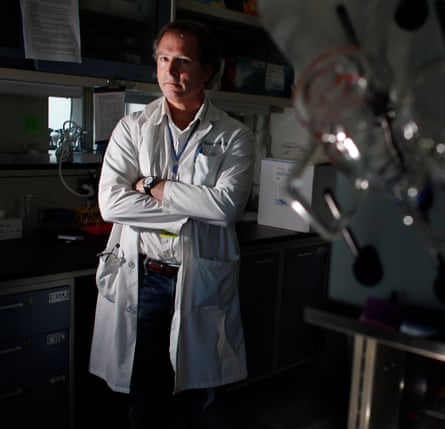
Relman, a Stanford professor who chaired the scientific panel, said its members were given access to open source and classified scientific studies into pulsed radio frequency energy, which suggested that the science behind there being a “device” that could cause AHI symptoms was plausible. Scientists who disagreed were simply unaware of the research into such technology that had been taking place for decades in several countries, especially in the Soviet Union and then Russia, he said.
Regarding the medical results, Relman conceded that plenty – perhaps the vast majority – of AHI claims could be explained by other factors. But there were dozens of cases “that were unusual in the distinctness of their features and the near impossibility of explaining them based on known medical and environmental conditions”. In short: the publicity around AHIs may have prompted a wave of false reporting, but a core subset of cases seemed real.
Determining who may have carried out such attacks was beyond Relman’s purview. That fell to the second expert group, which in 2023 issued the assessment that it was “very unlikely” to be caused by a foreign adversary, dismaying many AHI patients who had hoped to finally receive closure on what caused their health problems.
Even people who have seen the intelligence on Havana syndrome can disagree on what it suggests. Two sources offered the Guardian radically different interpretations of what the classified data shows on possible Russian involvement.
One highlighted the lack of a “smoking gun”; a piece of human intelligence or an intercept that showed Russian operatives discussing a programme to use directed energy against Americans.
“Everyone has seen how strong our collection capabilities on Russia are,” the source said, referencing how US intelligence got hold of Putin’s war plans before his February 2022 invasion of Ukraine. “If this was really a large-scale Russian programme, we would have expected to see something in some of these channels, but we didn’t.”
Another former intelligence official disagreed: “If you’re waiting for an intercept of someone saying: ‘My name is Igor and I’m going to press the button on my secret laser’ before you have confidence, that’s probably never going to happen. But for any reasonable person who has access to the intelligence and knows how to read it, the Russian fingerprints are clear.”
If that is the case, it raises the question of why the 2023 intelligence community assessment found it “very unlikely” that a foreign actor was involved. At the end of the Biden administration, a tweaked version said that while five US intelligence agencies still found it “very unlikely”, one agency now believed there was a “roughly even chance” that a foreign actor had used “a novel weapon or prototype device” in a number of attacks.
This summer, both of those Biden-era assessments were rescinded by Trump’s director of national intelligence, Tulsi Gabbard, in a memo issued just before she left office. Gabbard said the earlier assessments were marred by “selective exclusion of evidence” and “mischaracterisation of sources”, though the statement did not release any new evidence or provide a revised assessment.
While Gabbard had a chequered reputation among the intelligence community, Mark Zaid, a lawyer who represents more than 30 AHI patients, welcomed her memo and said it was a first step to overturning a CIA cover-up. When asked why the CIA might have perpetrated such a cover-up, Zaid suggested it could be to protect its reputation after prior negligence. “This has built up to a level that the agency can’t let the truth get out because it’s going to reflect so poorly on them,” he said.
Burns, in a comment for Rey and Zill’s book, said it was “simply not true that there was a ‘cover-up’ by the CIA” and described the earlier investigation as “a rigorous effort across the entire intelligence community”.
Rey and Zill believe the purported cover-up was a result of multiple factors over many years. “There’s not a single cigar-filled backroom meeting that led to decisions getting made,” said Rey. “There was a lot of, ‘This is a pain in the ass’ or ‘The president’s not going to want to hear this’. There was bureaucratic dysfunction, careerism and things that just got in the way of proper investigation.”
One example he gave is the fact that the FBI sent criminal investigators, rather than counterintelligence investigators with access to classified information, to Havana after the attacks there. Another is a nascent investigation at CIA headquarters in late 2019 which reportedly found that, in some cases, phones linked to Russian intelligence operatives had been in the vicinity of suspected Havana syndrome incidents. These included the hits that year on the senior CIA officer in London and Warsaw.
In London, a suspicious phone had supposedly been just 10 metres (30ft) away from his hotel room. But when the then CIA director, Gina Haspel, was briefed on these findings, she allegedly complained it was not solid enough to take to the president, given how sensitive he was on Russia-related matters. “The meeting abruptly ended after Haspel shouted that if she took reports like this to President Trump, she would be fired as director,” Rey and Zill write.
Outside the CIA, some have uncovered intriguing leads about possible links between Russian operatives and AHIs. Christo Grozev, a journalist and investigator who has exposed several Russian intelligence operations, claimed leaked travel data suggested at least four potential crossovers between suspected AHIs and travel by officers from Unit 29155 of Russia’s GRU military intelligence, known for its campaign of sabotage and assassinations in western countries. He also said he had traced travel by “members of what appears to be a technical unit adjacent to 29155” to Cuba during the initial attacks.
Perhaps the most significant piece of evidence to emerge recently has been the alleged US government acquisition of a “Havana syndrome-style device” in an undercover operation. First reported by the independent journalist Sasha Ingber this year, two sources confirmed to the Guardian that a device had been acquired and brought to the US in late 2024 for testing, after a purchase from a dark-web seller.
Rey and Zill’s book recounts a meeting with a person who claimed to be part of the undercover team that acquired the device. The source told them the device was “man-portable”, shot non-thermal pulsed microwaves and was acquired from “a complex Russian illicit network”.
It was not believed to have been used in a Havana syndrome incident, but testing on animals has reportedly shown it may cause similar symptoms to AHIs, which could prove that building such a device is scientifically possible.
That would make the case for a weapon being involved in some incidents more plausible, and would also raise new and worrying questions. If such weapons have proliferated to the extent that one can be bought on the dark web, how many devices could be out there and who may have access to them? Could AHIs thus have not one perpetrator, but many? And is there a future in which such weapons become a widespread element of warfare? “We know the technology has reached a level that enables it to be used in weaponisable ways,” said Giordano. “I see that as a clear and present threat.”
For those who have had symptoms for years, the acquisition of the device and the rescinded intelligence assessments provide some hope that, one day, they will receive official confirmation that they were targeted by a foreign adversary. For many of them, the lack of recognition at home has angered them more than the attack itself.
“The Russians are our enemy, I put them in the same bucket as al-Qaida or the Taliban, or any other groups I worked against,” said Polymeropoulos. “Do I want to see them held accountable? Of course. But I’m actually more upset and feel more of a betrayal from my own government.”
-
The Havana Syndrome by Michael Rey and Oriana Zill de Granados is published by Crown Publishing in the US on 13 October and by WH Allen in the UK on 15 October.