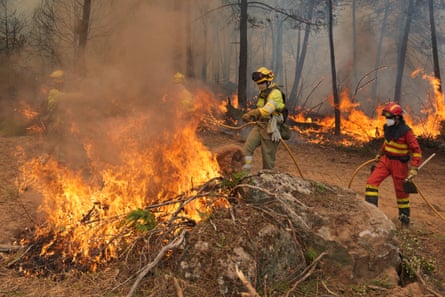
A combination of an unusually wet winter, very low rainfall since spring and repeated record-breaking summer heatwaves is likely to explain why wildfires have ignited, spread and resisted control so readily across France and Spain in recent days.
About 90% of wildfires are started by human activity, typically igniting “fine fuels” such as vegetation grass, pine needles, litter and twigs. And recent weather has almost certainly made ignition far easier. Drought in western Europe has turned this vegetation – which normally dries after only a few hours of heat and low rainfall – into tinder.
Fine fuel moisture code values climbed above the 96th percentile this month, while France and Spain’s eighth-wettest winters on record left an abundance of fine fuel ready to burn.
Once established, fires can spread into heavier fuels including shrubs, roots and deeper litter if conditions are dry enough. These materials burn hotter and for longer, can smoulder long after flames appear to have extinguished and generate towering columns of superheated air capable of carrying embers far beyond the blaze.
Heavier fuels also take much longer to dry than fine fuel, but this year’s prolonged dry spell and three record-breaking heatwaves have allowed them to dry substantially.
Winds may have also made the fires harder to predict. France’s largest blaze, in Gironde, initially spread westwards towards the coast on an easterly breeze before winds abruptly turned westerly on Friday, driving the fire back towards Bordeaux. Fires of this scale can also generate their own strong, gusty winds, creating unpredictable behaviour that complicates firefighting efforts.
Showers and thunderstorms near the largest fires in France and Spain brought little rainfall on Saturday and may instead have made conditions worse. Rain evaporating beneath a storm cloud cools the air, making it denser, so that it rapidly sinks to the ground before spreading in all directions. These downdrafts can fuel sudden, erratic fire behaviour. Cloud-to-ground lightning without accompanying rainfall can also ignite new fires.
With increasingly high pressure expected to delay any meaningful – albeit unevenly distributed – rain until the end of the week, while increasing the likelihood of a fourth summer heatwave across much of Europe, the threat of further large wildfires is likely to persist into August.
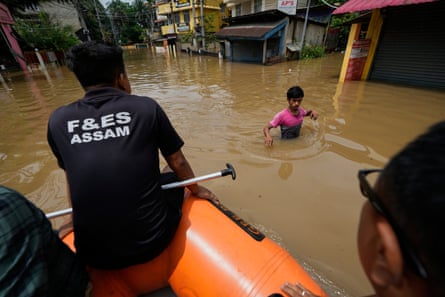
Elsewhere, heavy rainfall and glacial melt in Afghanistan, Pakistan and India over the past week and a half have triggered severe flooding, with at least 180 people reported dead.
Monsoon rain, colliding with out-of-season western disturbances, has brought up to 250mm of rain in 24 hours – almost half the average annual rainfall of London, UK – causing rivers to burst their banks and triggering landslides.