Mehaniq/Shutterstock
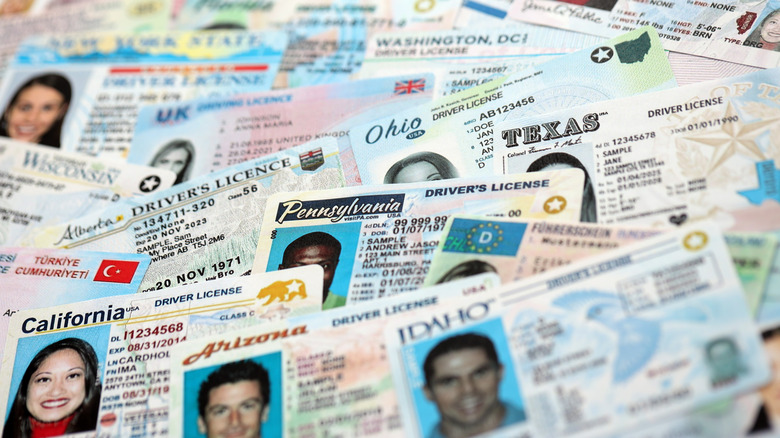
If you live in one of a few Northern border states in the U.S. — Michigan, Minnesota, New York, Vermont, or Washington — you may have heard of something called an enhanced driver's license. Even if you live in Canada, residents of British Columbia, Manitoba, Ontario, and Quebec may have heard the same phrase. But what really is an EDL, and is it worth the extra hassle of getting one?
An enhanced driver's license serves as proof of citizenship, similar to a passport or passport card. The U.S. Department of Homeland Security accepts EDLs as a way to reenter the country by land or sea, so long as you're coming from Canada, the Caribbean, or Mexico. The application process varies a bit based on which state or province you're getting your card from, but it generally requires a bit of extra paperwork — here in New York, that extra paperwork amounts to proof of residence, citizenship, and your name.
Enter, but not necessarily leave
Mehaniq/Shutterstock
Just because an EDL lets you enter the United States, though, doesn't mean you can necessarily leave and head to other countries without your passport. Canada accepts EDLs in place of passports for entry from the U.S., even if those licenses were issued by the States rather than Canada, but Mexico and the Caribbean don't. You'll still need a passport or passport card to get into those countries, so don't rely on your EDL at the border.
Whether an EDL is worth it for you depends on your travel. I got mine when I lived in upstate New York, and making day trips to Toronto was common — I used it plenty of times just to go see concerts by artists too big and fancy to slum it in Rochester. If you're not much of an international traveler, you may not see the same benefits. If you already need to upgrade to a RealID, though, you may as well bring the extra paperwork along with you. Better to have an EDL and not need it than to lose your passport somewhere abroad and be left with no way home.
>> Home